







If you are wondering how to clean leather shoes, brush off the dirt, wipe them with a barely damp cloth and a little saddle soap, let them dry slowly away from heat, then feed the leather with a cream. Done every few weeks through winter, that routine keeps leather supple and stops the fine cracks that finish a good pair early. Below we cover the kit, the steps, winter boots and special finishes. It is how we look after the leather footwear in the shop.
We buy leather footwear for how it will look in its third winter, not its first. That means soft calf from Anonymous Copenhagen, made in Portugal from LWG certified leather; boots from Pavement, handmade in Portugal with full leather linings; and cow leather styles from Alohas, given a hand-finished vintage effect. Good leather takes care well, and most of what follows is about not undoing that work.
One check before you start: the finish. Our product pages describe it as smooth, shiny surface, distressed, metallic or patent, and the finish decides what you use. A neutral cream suits almost every leather we stock; a coloured wax polish suits plain smooth leather only.
What you need to clean leather shoes
A small kit covers almost everything:
- A soft horsehair brush for dirt, and a second one kept clean for buffing
- Two lint-free cotton cloths; old T-shirts work well
- Saddle soap or a pH-neutral leather cleaner
- A leather cream or conditioner, neutral or matched to the colour
- Cedar shoe trees for shoes, and newspaper or boot shapers for boots
- A water and stain protector spray
Avoid washing-up liquid, baby wipes and household sprays as a routine clean. They can strip the finish and dry the leather, which shows weeks later as dull patches or cracked creases. Test anything new inside the heel or under the tongue first.
How to clean leather shoes, step by step
Take the laces out and put shoe trees in, so the leather is taut and the creases open up. Then brush off dry dirt, working into the welt where the upper meets the sole. If the mud is still wet, let it dry first, because brushing wet mud pushes it into the grain.
Next, dampen a cloth, work up a small lather on the saddle soap and wipe the shoe in small circles, one section at a time. Go over it again with a clean damp cloth to lift the soap off. The leather should feel damp, never soaked.
Let the shoes dry slowly at room temperature, ideally overnight, away from radiators, fires and hairdryers. Heat pulls the natural oils out of leather and is a common cause of cracking.
Once dry, rub a pea-sized amount of cream into each shoe with a cloth, in small circles, paying attention to the creases across the toe. Leave it for ten minutes, then buff with the clean brush. For more shine and some water resistance on plain smooth leather, finish with thin layers of wax polish, buffing between each.
For pairs worn weekly, brush after wearing and clean and condition once a month in winter, or every two to three months in drier weather.

How to clean leather boots: rain, mud and salt marks
Boots do the hard work from November to March, and in Cardiff that means rain most weeks and gritted pavements whenever it freezes. The steps match those for shoes, with a few additions.
If your boots come home wet, stuff them loosely with newspaper, swap it for dry paper after an hour, and leave them on their side at room temperature. Resist the radiator, even when you need them the next morning.
Road salt leaves a white tide line and, left for long, draws moisture out of the leather until it stiffens. Mix equal parts white vinegar and cool water, dab it onto the mark with a cloth, wipe over with plain water and let the boot dry before you condition it. An old mark may take two rounds.
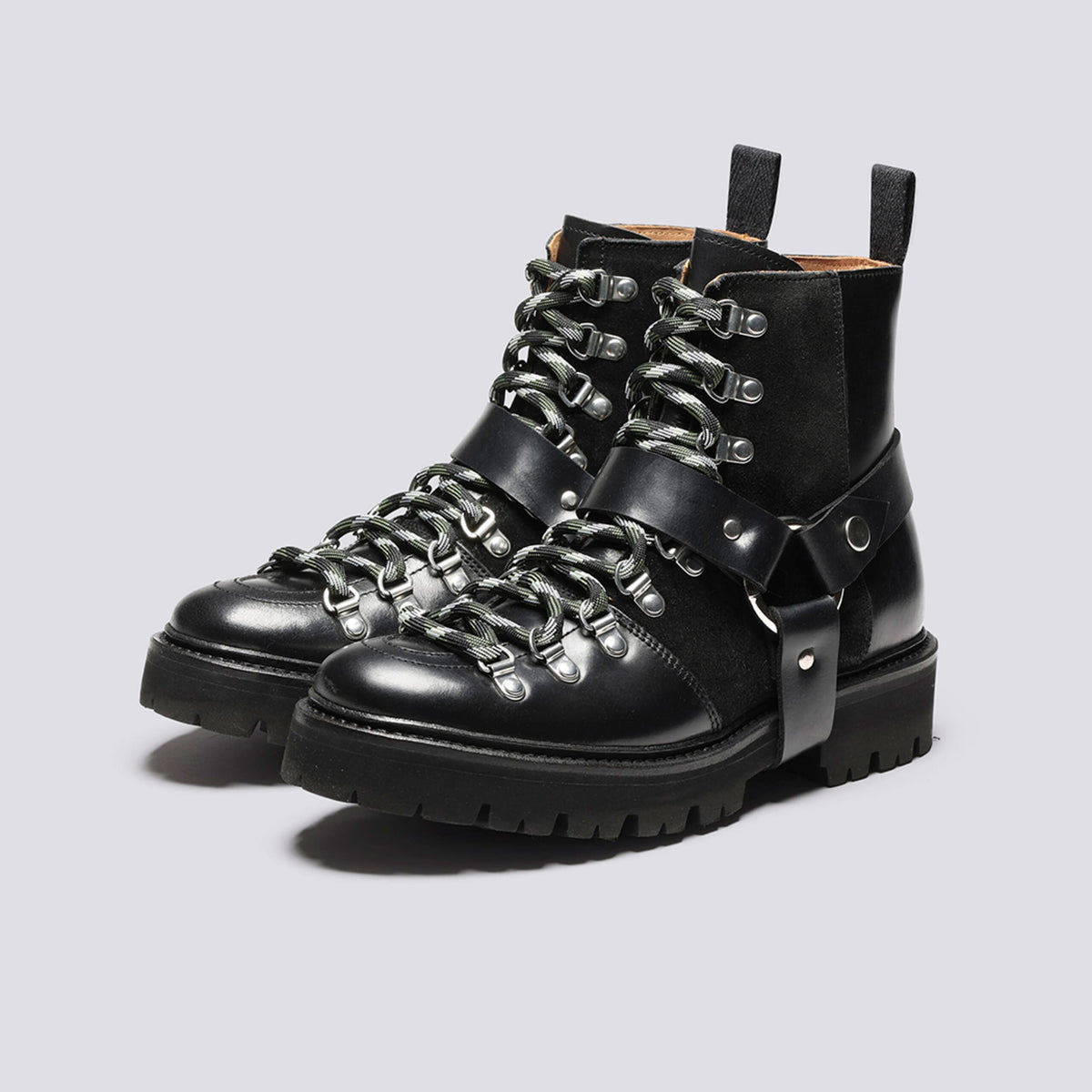
On tall boots, clean and condition the whole shaft, not just the foot, because the ankle crease takes the most strain. A boot shaper or a rolled magazine keeps the shaft upright between wears so creases do not set. Chunky lug soles hold grit, so clear the tread with a stiff brush before it scratches the uppers. Browse our boots for this season's leather styles.

How to clean vintage effect, metallic, patent and white leather
Vintage effect and hand-finished leather has its colour rubbed back by hand, so the toe and heel sit lighter than the rest. Use a neutral cream rather than a coloured polish, or you will even the shading out. Hand-painted leather, used on some of the boots we stock, needs the same approach, tested first on a hidden spot.
On metallic leather the colour sits in a thin top layer. Wipe it with a soft damp cloth, dry it straight away, and skip saddle soap, coloured cream and stiff brushes, which can wear through the finish.
Patent leather needs only a damp cloth and a soft dry one to buff. Scuffs often lift with a little leather cleaner on a cotton bud; wax polish smears rather than shines.
For white leather trainers, use a soft brush and a little mild soap in water, worked in small circles, then wipe clean. Do the midsoles separately and avoid bleach, which can yellow white leather. Suede and nubuck need a different routine altogether, covered in our guide to how to clean suede.

How to protect and store leather shoes
Prevention saves most of the work. Spray new leather with a protector before the first wear, holding the can about 25cm away, and again every few weeks in wet weather. Give each pair a day off between wears so the inside dries out. Store them with shoe trees somewhere cool and dry, in cloth bags or their boxes rather than plastic, which traps moisture. If a pair has been put away for summer, condition it before its first outing of the season.
Looking after your leather
Leather shoes last when they are kept clean, dried slowly and fed regularly. Brush after wearing, clean and condition monthly through winter, match the product to the finish, and keep them off the radiator. If you are choosing a pair to wear with this season's trousers, our guide on what shoes to wear with wide leg trousers is a good place to start. We buy leather footwear in small numbers each season, so take a look at our footwear for what we have now.
Frequently asked questions
Can you wash leather shoes with soap and water?
Yes, gently. Use a little saddle soap or mild soap on a damp cloth, wipe in small circles, then remove the soap with a clean damp cloth. Never soak or submerge leather, and let the shoes dry slowly at room temperature before you condition them.
Can you put leather shoes in the washing machine?
No. Soaking and tumbling can shrink, stretch and crack leather, strip its finish and loosen glued soles. Clean leather shoes by hand with a brush, a damp cloth and saddle soap instead.
What household products can you use to clean leather shoes?
A mild soap on a damp cloth lifts everyday dirt, and equal parts white vinegar and water removes salt marks. Avoid washing-up liquid, bleach, baby wipes and alcohol-based cleaners as a routine, as they can dry the leather or strip its finish. Test anything new on a hidden spot first.
How do you get salt stains off leather boots?
Mix equal parts white vinegar and cool water, dab it onto the white tide line with a soft cloth, then wipe over with plain water. Let the boots dry at room temperature, away from radiators, and condition them once dry. An old mark may need two rounds.
How often should you condition leather boots?
About once a month through autumn and winter, when rain and road salt dry leather out, and every two to three months in drier weather. Condition sooner if the creases look pale or dry, and always after a deep clean or a soaking.
Can you use Vaseline on leather shoes?
Petroleum jelly can add a little shine and water resistance, but it does not feed leather the way a conditioner does and can darken lighter colours. A leather cream, neutral or matched to the colour, is the better choice for regular care.
