







If you are wondering how to clean suede, start dry: let the shoes dry completely, brush off loose dirt with a suede brush, then lift marks with a suede eraser. Only reach for a barely damp cloth, a little white vinegar or a dedicated suede cleaner when dry methods have not worked, and finish with a protector spray. It is the same routine for loafers, trainers, heels and boots, and it is how we look after every pair of suede footwear in the shop.
When we buy suede, we check what the upper is made from before anything else. The loafers from Alohas have uppers in 100% cow suede, our gloves are goat suede, and the loafers from Pavement are handmade in Portugal on rubber soles. Cow suede has a slightly coarser, hard-wearing nap; goat suede is finer and softer. Both are cleaned the same way.
One care note before you start: suede is the inner side of the hide, buffed until the fibres stand up into a soft nap. Water does not ruin it, but uneven wetting, heat and hard scrubbing flatten that nap and leave marks, so every step below is about being gentle and even.
What you need to clean suede shoes
You do not need a cupboard of products. A basic kit covers almost everything:
- A suede brush, ideally with soft nylon bristles on one side and brass or crepe rubber on the other
- A suede eraser or cleaning block, or a clean white pencil eraser at a push
- A clean microfibre cloth or flannel
- White vinegar and cornflour from the kitchen cupboard
- A suede protector spray, and shoe trees or plain paper for stuffing
Avoid stiff wire brushes on fine goat suede, coloured erasers that can transfer dye, and washing-up liquid on anything but stubborn grease, as soap can leave a darker patch behind.
How to clean suede shoes, step by step
First, make sure the shoes are completely dry. Brushing wet suede pushes dirt deeper into the nap, so leave muddy pairs overnight, stuffed with paper, at room temperature.
Next, brush the whole shoe with light strokes in one direction to lift surface dust, then go back and forth over scuffed or flattened areas to raise the nap. Suede looks paler or darker depending on which way the fibres lie, so finish with strokes all in the same direction for an even colour.
Then use the eraser on any marks that remain, rubbing gently as you would on paper, and brush away the crumbs. Most everyday scuffs on loafers come out at this stage.
Only if a mark is still there, dampen a cloth very lightly with white vinegar and dab the area, working from the edge of the mark inwards. Let it dry naturally and brush again. Always test any liquid on a hidden spot first, such as the inside of the heel, because some dyed suede can bleed colour.

How to clean suede boots: water marks, mud and salt
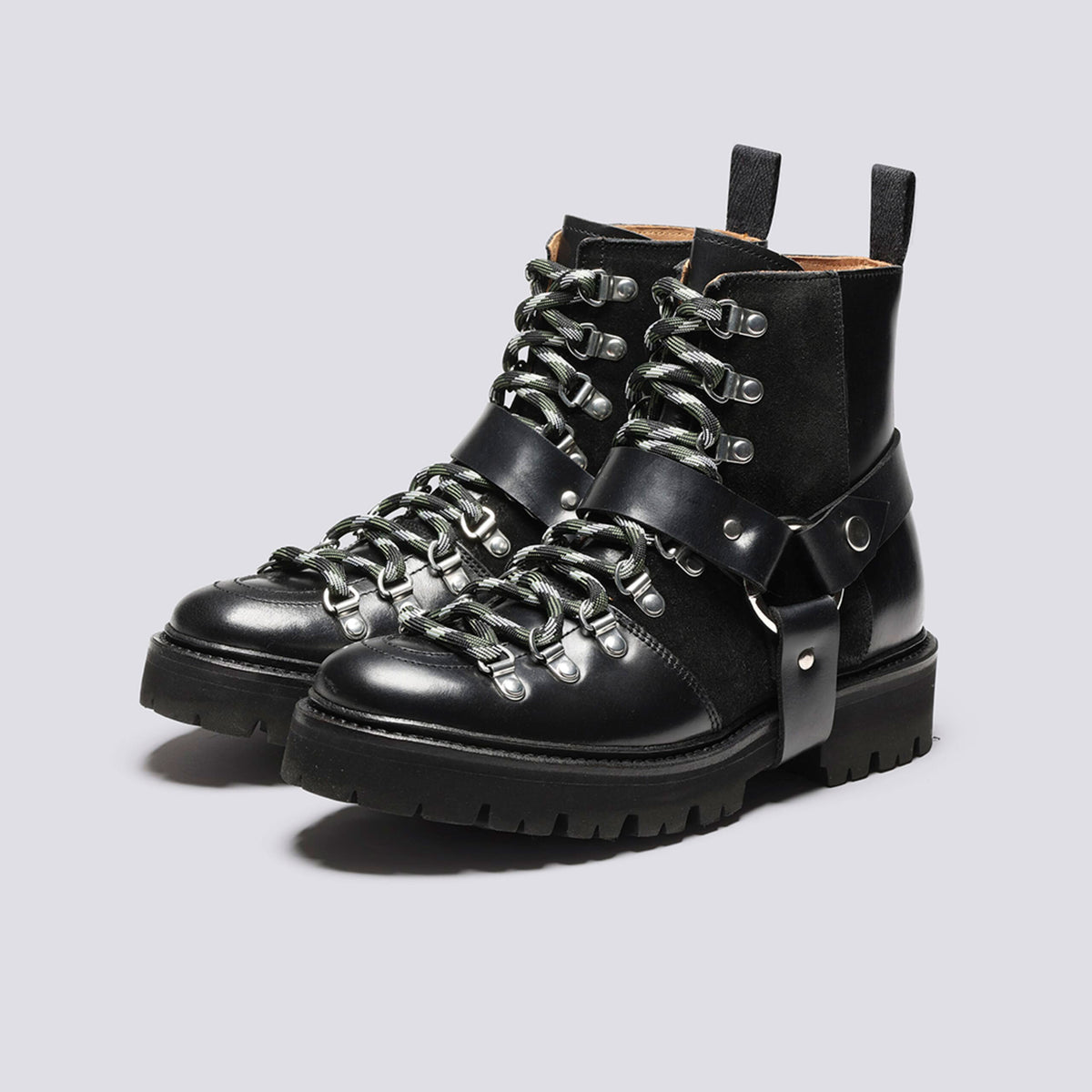
Suede boots work hard in a wet Welsh winter, and the three marks we are asked about most are rain spots, mud and the white tide lines left by gritted pavements.
Water marks form because one patch dries faster than the rest. The fix sounds backwards: dampen the whole panel evenly with a lightly wet sponge or cloth, blot away the excess, stuff the boot with paper and let it dry slowly at room temperature. Never put suede on a radiator, by a fire or under a hairdryer, which stiffens and shrinks the leather. Once dry, brush the nap back up.
For mud, wait until it has dried hard, knock off the worst, then brush. For salt marks, mix equal parts white vinegar and water, dab it onto the tide line with a cloth, let the boots dry and brush. You may need two or three rounds on an old mark. Browse our boots for this season's styles.

How to clean suede shoes without suede cleaner
Most marks come out with household basics. For grease or oil, such as a drop of salad dressing or a mark from a bike chain, cover the spot with cornflour and leave it for a few hours, or overnight, so the powder draws the oil out. Brush it away and repeat if needed. For a stubborn oily patch, a tiny amount of washing-up liquid on a damp cloth, blotted off straight away, is the last resort.
Two of the materials we stock need a lighter touch. Metallic suede, used on some of our evening sandals, has a finish that can rub away, so use only the soft side of the brush and skip the eraser. Trainers with suede panels next to nylon, a common mix on retro runners, are best cleaned panel by panel: wipe the nylon with a damp cloth, keep the water off the suede, and brush the suede dry. Take the laces out and wash them separately.
Whatever the mark, never put suede shoes in the washing machine or soak them in water.
How to protect and store suede
Protect new suede before you first wear it. Brush the shoes first, then spray from about 20cm away in an even coat, outdoors or by an open window, and leave them for 24 hours before wearing. Test it on a hidden spot first, as some sprays darken lighter shades slightly. Reapply every few weeks through autumn and winter, and after every deep clean.
Store suede somewhere cool, dry and out of direct sun, which fades the colour. Cedar shoe trees hold the shape and absorb moisture; a cotton dust bag lets the leather breathe, where plastic traps damp. Fringed loafers need a quick brush after each wear so the fringe does not mat. Our goat suede gloves follow the same rules: brush them, spot clean only, and dry them flat away from heat.

Looking after your suede
Suede is tougher than its reputation. Brush it often, let it dry before you touch it, deal with water and salt marks evenly, and protect it before the weather turns, and a good pair will see you through many winters. For ideas on wearing your suede loafers and boots, see our guide on what shoes to wear with wide leg trousers, and for your knitwear, our guide on how to wash cashmere. We buy suede in small numbers each season, so take a look at our footwear for what we have now.
Frequently asked questions
Can you put suede shoes in the washing machine?
No. Soaking and tumbling flatten the nap, can shrink and stiffen the leather and may loosen glued soles. Clean suede by hand instead: brush it dry, lift marks with a suede eraser and use only a barely damp cloth for anything stubborn.
Does water ruin suede?
Not usually. Rain leaves marks because patches dry unevenly, and heat stiffens wet suede. Blot the shoes, stuff them with paper and let them dry at room temperature, then brush. A protector spray makes water bead off in the first place.
Can you use vinegar on suede?
Yes, white vinegar is safe on most suede in small amounts. Dab it on with a lightly dampened cloth rather than pouring it, let the area dry naturally and brush the nap back up. Test it on a hidden spot first in case the dye bleeds.
How do you get salt marks off suede boots?
Mix equal parts white vinegar and water, dab the solution onto the white tide line with a cloth, then let the boots dry slowly away from heat and brush them. Older salt marks may need two or three rounds.
How often should you use suede protector spray?
Spray new shoes before their first wear, then reapply every few weeks while you are wearing them regularly in autumn and winter, and again after any deep clean. Always brush first and let the spray dry for 24 hours.
What is the difference between suede and nubuck?
Suede is made from the inner side of the hide, buffed into a soft, loose nap. Nubuck is the outer side, sanded to a much shorter, velvety finish. Both are cleaned the same way, though nubuck marks more easily, so brush it more gently.
